In the blood-red skies of World War I, where machines had only just begun to replace men on horseback, there soared a legend. His name? Manfred Albrecht Freiherr von Richthofen. History remembers him better as the Red Baron—aviation’s first superstar, a war hero whose exploits would make him both feared and admired across Europe.
But who was the man behind the red Fokker triplane? Was he a merciless killer or a chivalrous knight in the air? The truth lies somewhere in between—crafted in the trenches, carved in the clouds, and immortalized in legend.
From Prussian Roots to Cavalry Ranks
Born on May 2, 1892, in Breslau, in what was then part of the German Empire (now Wrocław, Poland), Manfred von Richthofen came from a family of minor aristocracy. His early life wasn’t that of luxury, but it was certainly one of discipline. Like many young boys of noble birth, he was educated in military cadet schools. The rigid lifestyle wasn’t to his liking, and he reportedly found the discipline “boring and pointless”—an ironic statement coming from a man who would later embody military order in the air.
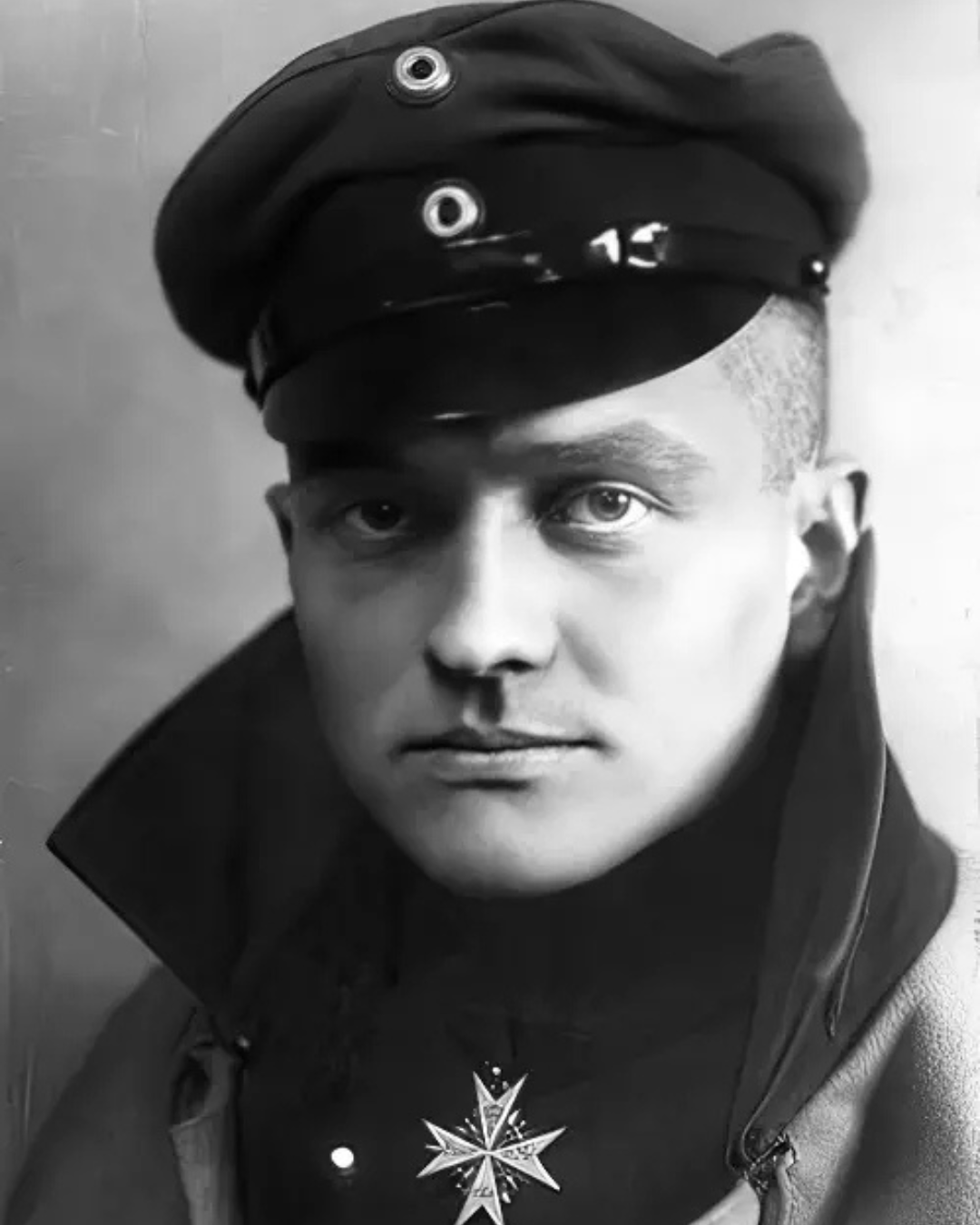
Initially commissioned into the cavalry, Richthofen found himself frustrated as modern warfare began to render horseback units increasingly obsolete. World War I was not kind to tradition. Trenches, barbed wire, and machine guns made cavalry charges suicidal. For the thrill-seeking young officer, that simply wouldn’t do.
Wings of Fate: Entering the World of Aviation
In 1915, Richthofen applied to transfer into the Imperial German Army Air Service, despite not being a particularly gifted student of flight. His instructors reportedly called his early performance “average,” and some doubted whether he’d ever become an effective pilot. But what he lacked in technical flair, he made up for in icy focus, situational awareness, and an uncanny sense of timing.
His first role was as an observer, manning a rear-mounted machine gun while someone else flew. But by late 1915, he began pilot training—and soon after, took to the skies as a fighter pilot. It was in the cockpit that Richthofen discovered his true calling. No longer constrained by the mud and blood of the trenches, he had found a new arena—a place where individual skill still reigned.
Under the Wing of Boelcke
Much of Richthofen’s rise can be credited to his time under the mentorship of Oswald Boelcke, Germany’s first great ace and architect of modern air combat tactics. Boelcke taught him not only how to fly and shoot, but how to survive. His rules for air combat—never fight alone, strike from above, never pursue a fleeing enemy too low—became gospel for Richthofen.
He took these lessons to heart, and with remarkable discipline. On September 17, 1916, he recorded his first confirmed kill. It wouldn’t be long before the count began to rise—rapidly.
The Birth of the Red Baron
In early 1917, Richthofen painted his Albatros D.III bright red. It was a bold move. In a war that had already claimed thousands of pilots, making yourself an obvious target seemed foolhardy at best. But Richthofen wasn’t seeking invisibility—he was cultivating fear. He wanted enemies to know who was coming for them.
Soon, he became a legend: the Red Baron. His squadron, Jagdstaffel 11 (or Jasta 11), became a gathering of Germany’s best young fliers. Under Richthofen’s command, it became a finely tuned machine—deadly, precise, and mobile.
That mobility earned them the nickname “The Flying Circus.” With tents, bright colors, and constant movement across the front, the name fit in more ways than one. But this was no traveling show. In April 1917—later known to the Allies as “Bloody April”—the Red Baron downed an astonishing 22 aircraft in a single month. His tally soon climbed past 50.
Not Just a Pilot—A Tactician
Unlike some pilots who relied on flashy maneuvers or daredevil stunts, Richthofen was a hunter. He stalked his prey calmly, used altitude and sun angles to his advantage, and almost never took unnecessary risks. His favorite tactic was to approach unseen, fire with deadly accuracy, and vanish before the enemy knew what hit them.
He wasn’t known for aerobatics or flamboyant flying. He was methodical—clinical even. And yet, there was an undeniable charisma in his leadership. His red plane wasn’t just a symbol of pride, it was a rallying point for his squadron. When Richthofen flew, others followed.
Wounded but Not Broken
On July 6, 1917, Richthofen was nearly killed in combat. A bullet grazed his head, fracturing his skull and leaving him briefly unconscious in the cockpit. Somehow, he managed to land behind German lines. He was grounded for a time but returned to flying against medical advice. Some historians speculate that the injury affected his judgment later on—possibly even playing a role in the decisions that led to his death.
Still, he pressed on. By early 1918, his kill count had reached 80 confirmed aerial victories—a record that remains unbroken by any pilot from World War I.
The Final Flight
On April 21, 1918, the Red Baron took off in his iconic red Fokker Dr.I triplane for what would be his last patrol. While pursuing a Canadian Sopwith Camel flown by novice pilot Wilfrid May, Richthofen broke several of his own rules. He flew too low. He followed too far behind enemy lines. Some believe the head wound he sustained months earlier impaired his decision-making. Others think he simply let his instincts override his caution.
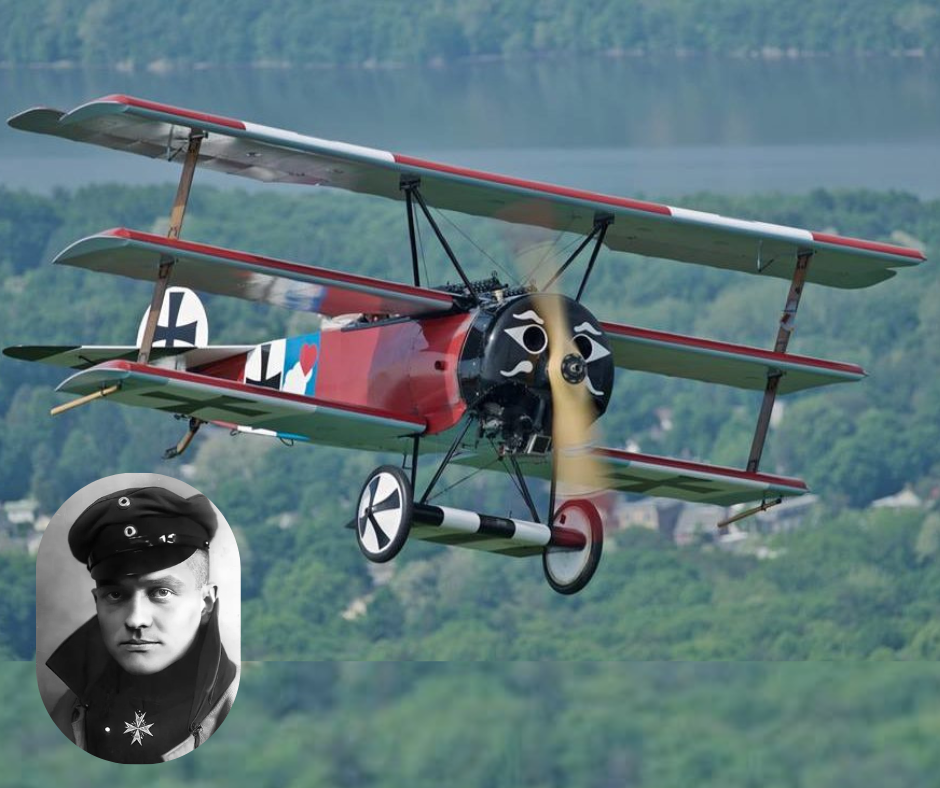
While circling over the Somme River, Richthofen was struck by a single bullet. He managed a controlled landing in a field, but was dead by the time Australian troops reached him. The source of the fatal shot remains debated to this day—some credit Canadian pilot Roy Brown, others believe it came from ground fire. Regardless, the Red Baron was gone. He was 25 years old.
A Funeral with Honor
In a rare moment of mutual respect, the Allied forces buried Manfred von Richthofen with full military honors. Six Australian officers served as pallbearers. Photographs from the funeral show solemn faces and a cross marked “Captain Baron von Richthofen.” Even in death, he had earned the respect of his enemies—a testament to the chivalry and mythos surrounding early air combat.
Legacy of a Legend
Manfred von Richthofen wasn’t just a killer in a flying machine. He was a symbol—a man who turned the horror of industrial warfare into something personal, almost medieval. He fought not in muddy trenches but in the blue above, one-on-one, guided by skill and instinct.
His memoir, Der Rote Kampfflieger, painted him as a knight of the skies—a romanticized image heavily edited by wartime censors. But behind the propaganda was a young man driven by discipline, ambition, and a deep sense of duty.
The Red Baron has since become a cultural icon. He’s been featured in everything from comic books to rock songs to breakfast cereal. But beneath the cartoonish caricature lies a real story—of innovation, of war, and of a young pilot who mastered the air at a time when flying was still a marvel.
Final Thoughts
The legend of the Red Baron endures not just because of his impressive tally of victories, but because of what he represented. In a world descending into mechanized slaughter, he stood for a fleeting ideal—that even amidst chaos, there could be honor, skill, and even beauty in battle.
Manfred von Richthofen was the first great ace of modern warfare. And though he fell more than a century ago, his red triplane still casts a long shadow over the history of flight.