militaryandtech.com- The Panavia Tornado is a twin-engine, variable-sweep wing multirole combat aircraft developed collaboratively by the United Kingdom, Germany, and Italy through the Panavia Aircraft GmbH consortium, comprising British Aerospace, MBB, and Aeritalia.
First flown in 1974 and entering service by 1980, the Tornado came in three main variants: the IDS (interdictor/strike), ECR (electronic combat/reconnaissance), and ADV (air defense variant). Its versatile design allowed it to replace multiple aircraft types across its operators, with the Royal Saudi Air Force being the only export customer beyond the original partner nations.
Origins of the Tornado
The Panavia Tornado stands as one of the most iconic multirole combat aircraft developed during the Cold War era. Born from a unique collaborative effort between the United Kingdom, Germany, and Italy, the Tornado broke new ground in military aviation with its variable-sweep wings and diverse mission capability. It was not just a plane; it was a symbol of European defense unity and a technical marvel of its time.
In the late 1960s, as Cold War tensions were rising, NATO member countries realized the need for a versatile aircraft that could perform various roles — from deep strike missions and tactical bombing to electronic warfare and air defense. Rather than each country developing its own aircraft, the United Kingdom, West Germany, and Italy formed a consortium known as Panavia Aircraft GmbH. This tri-national venture included British Aerospace (formerly British Aircraft Corporation), MBB (Messerschmitt-Bölkow-Blohm) of Germany, and Aeritalia from Italy.
The goal was ambitious: to create a single aircraft capable of replacing several types already in use across European air forces. The concept of a variable-sweep wing aircraft — able to shift wing position for different flight profiles — was central to its adaptability. After years of development, the first prototype took flight on August 14, 1974.
Entry Into Service
Following extensive testing and refinement, the Tornado officially entered service in 1979. It quickly proved its worth as a highly capable aircraft with excellent low-level flying characteristics, powerful avionics, and robust engine performance. Its unique swing-wing design allowed for short takeoffs and landings, high-speed flight, and tight maneuvering at low altitudes — ideal for penetrating enemy airspace under radar coverage.
There were three primary variants developed to fulfill different operational needs:
-
Tornado IDS (Interdictor/Strike): The backbone of Tornado operations, this variant was optimized for low-level ground attacks, tactical bombing, and close air support.
-
Tornado ECR (Electronic Combat/Reconnaissance): Specialized for suppression of enemy air defenses (SEAD), equipped with electronic warfare systems and anti-radar missiles.
-
Tornado ADV (Air Defence Variant): A long-range interceptor designed for air superiority missions, primarily used by the Royal Air Force.
Each partner nation tailored the aircraft to its specific needs while keeping the core structure and systems consistent, simplifying production and training.
Operational History
The Tornado has seen extensive service in a number of conflicts. One of its most high-profile deployments came during the 1991 Gulf War, where both the Royal Air Force and Italian Air Force used it extensively for low-level strike missions against Iraqi targets. These missions were particularly dangerous due to dense anti-aircraft defenses, but the Tornado performed admirably, showcasing its high-speed penetration capabilities and terrain-following radar.
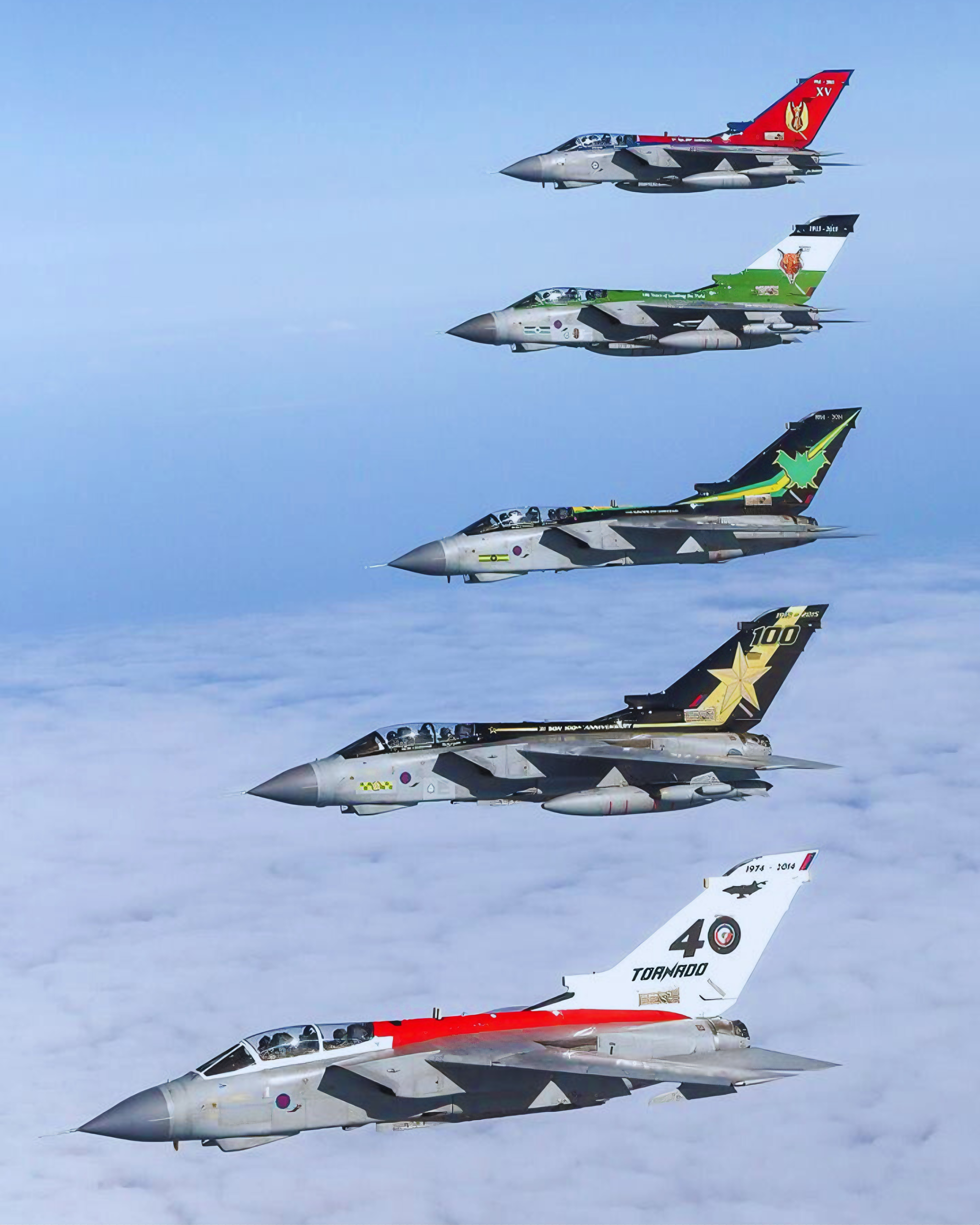
Tornados also saw action in the Balkans, Afghanistan, Libya, and the ongoing operations in the Middle East. Germany and Italy eventually retired or scaled back their Tornado fleets in favor of newer aircraft like the Eurofighter Typhoon, but the UK operated them until 2019. Saudi Arabia remains the last active user of the Tornado as of the mid-2020s.
International Cooperation
An essential part of the Tornado’s legacy lies in how it brought European nations together. The Tri-National Tornado Training Establishment (TTTE), based at RAF Cottesmore in England, was a unique facility where British, German, and Italian crews trained together under a unified command structure. This level of cooperation extended beyond the training phase, influencing logistics, maintenance, and mission planning protocols.
Interestingly, the Tornado also holds the distinction of being the only non-American aircraft certified to carry United States nuclear weapons under NATO’s Nuclear Sharing agreement. This role was particularly relevant during the Cold War, when deterrence strategy relied heavily on tactical nuclear delivery systems stationed in Europe.
Design and Technology
The Tornado’s most defining feature is its variable-geometry wings, which can be swept forward for takeoff, landing, and low-speed maneuvering, and swept back for high-speed flight. This feature made it uniquely suited for a wide range of missions in different environments, particularly in Europe’s diverse airspaces.
Powered by two Turbo-Union RB199 afterburning turbofan engines, the Tornado could reach speeds of up to Mach 2.2. It featured advanced avionics for its time, including a terrain-following radar, forward-looking infrared (FLIR) systems, and integrated navigation and attack computers.
In addition to conventional munitions, the Tornado could carry precision-guided bombs, anti-radar missiles, cruise missiles, and nuclear bombs. The aircraft’s modular weapon system allowed operators to customize payloads based on mission profiles — from high-speed intercepts to deep-penetration strike missions behind enemy lines.
Its cockpit, initially designed for two crew members — a pilot and a weapons systems officer — allowed for better workload sharing during complex missions. Over time, upgrades included GPS navigation, night vision capabilities, and digital weapon management systems.
Tornado Variants Overview
Here is a quick look at the major Tornado variants:
-
Tornado IDS (GR1 in RAF service): Primary strike aircraft with conventional and nuclear strike capability.
-
Tornado ECR: Optimized for SEAD missions, carrying HARM missiles and electronic surveillance systems.
-
Tornado ADV (F3 in RAF service): A stretched version with a larger radar, longer fuselage, and air-to-air missiles for long-range interceptions.
| Specification | Details |
|---|---|
| Crew | 2 (pilot and weapons systems officer) |
| Length | 16.72 meters (54 feet 10 inches) |
| Wingspan (spread) | 13.91 meters (45 feet 8 inches) |
| Wingspan (swept) | 8.60 meters (28 feet 3 inches) |
| Height | 5.95 meters (19 feet 6 inches) |
| Empty Weight | 14,000 kilograms (30,865 pounds) |
| Max Takeoff Weight | 28,000 kilograms (61,729 pounds) |
| Powerplant | 2 x Turbo-Union RB199-34R afterburning turbofan engines |
| Thrust | 40.5 kN dry, 73 kN wi |
You may like to read: English Electric Lightning, Britain’s Supersonic Interceptor Icon.
Retirement and Legacy
The Panavia Tornado served faithfully for more than forty years, a remarkable lifespan for any military aircraft. Its longevity is a testament to its smart design, flexible mission profile, and ability to evolve with changing combat requirements. From the Cold War to post-9/11 operations, the Tornado adapted to shifting geopolitical realities and technological advancements, often undergoing upgrades that kept it relevant in a rapidly changing defense environment.
When it was first introduced, the Tornado represented a bold step into the future, combining cutting-edge avionics, powerful twin engines, and variable-geometry wings into a single, unified platform. Over time, this same airframe accommodated improvements like GPS navigation, laser-guided munitions, digital radar systems, and night vision capabilities. Few aircraft have managed to stay this capable for this long, especially when operated by multiple countries with diverse defense needs.
As more advanced fighter jets such as the Eurofighter Typhoon and the F-35 Lightning II entered service, the Tornado began to step back from frontline duty. However, its contribution to military aviation and NATO operations remains firmly embedded in Europe’s defense history. Pilots who trained on the Tornado often went on to fly next-generation aircraft, carrying with them valuable experience in multirole combat operations.
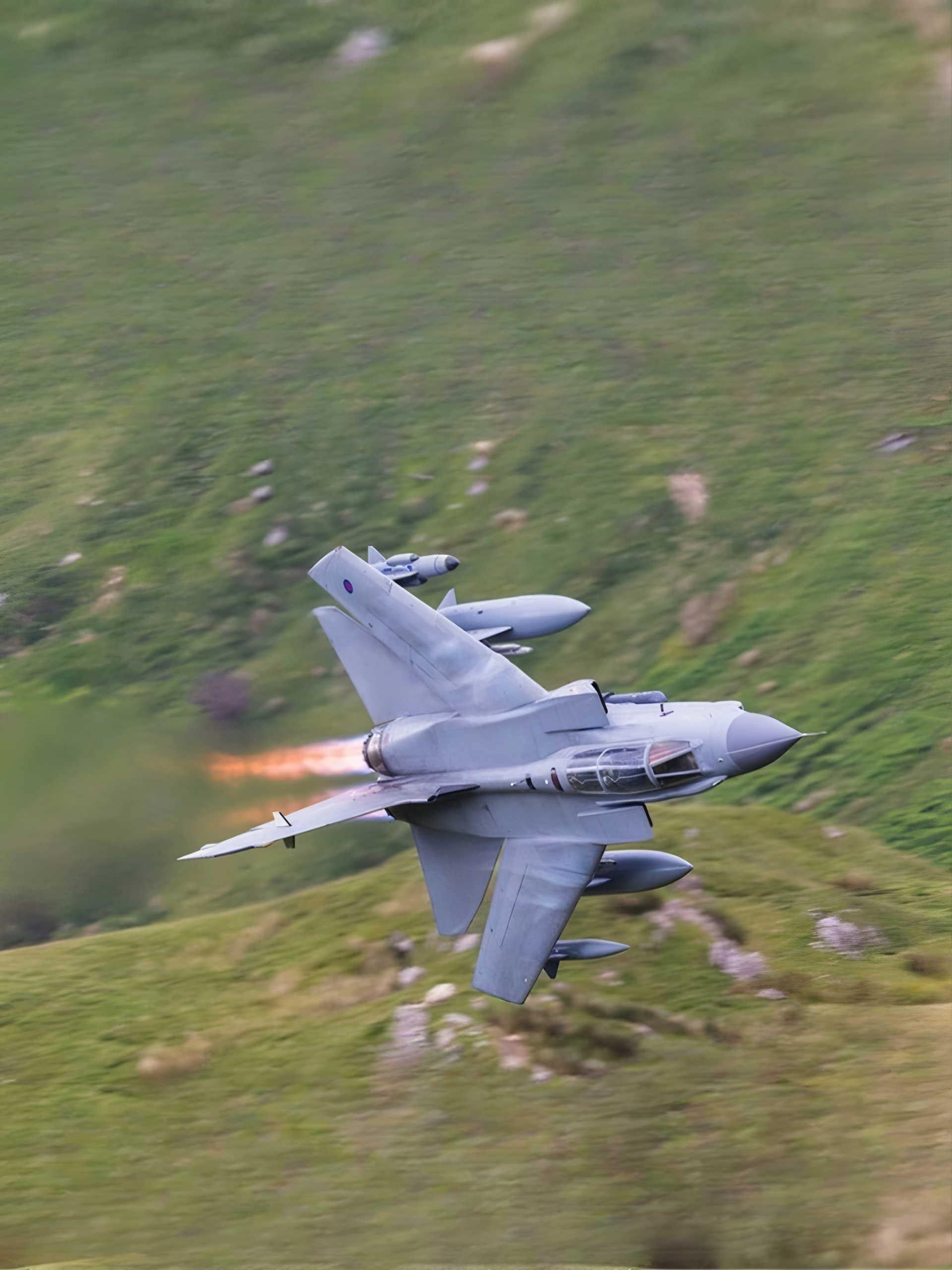
Beyond its physical presence, the Tornado’s most enduring legacy is arguably its role in fostering European defense cooperation. The joint development and production model behind the Tornado served as a prototype for future multinational efforts, proving that countries with different industrial cultures and military doctrines could work together to create something truly exceptional. The organizational and political lessons learned during the Tornado’s development directly influenced the creation of the Eurofighter Typhoon and continue to shape the path of the Future Combat Air System, Europe’s next-generation fighter program.
The aircraft also influenced air strategy itself. Before the Tornado, few jets offered such a blend of speed, agility, low-level penetration capability, and payload versatility. It allowed commanders to plan missions with greater confidence, knowing the aircraft could evade radar, deliver precision strikes, and make it home safely.
Even after retirement from most NATO nations, the Tornado continues to serve in the Royal Saudi Air Force, where it remains a vital part of the kingdom’s aerial capabilities. Its presence in the Middle East ensures that this historic aircraft remains a part of ongoing strategic operations.
Conclusion
The Panavia Tornado was never just another fighter jet. It was the product of vision, compromise, and engineering brilliance that reshaped the way Europe approached air combat and defense collaboration. Its ability to serve across such a wide range of missions, environments, and threat profiles made it an essential tool in countless military operations over the past forty years.
From flying treetop-level bombing runs during the Gulf War to intercepting high-altitude threats in the North Sea, the Tornado proved time and again that it could be relied upon. It brought together nations, technologies, and armed forces in ways rarely seen before its time. With its distinctive swing wings and unmistakable roar, it became not just a machine of war, but a symbol of unified strength and innovation.
Though its service life is drawing to a close, the Tornado leaves behind a powerful legacy. It laid the foundation for today’s modern multirole aircraft and demonstrated the strategic advantages of multinational cooperation. As Europe and its allies now look ahead to sixth-generation fighters and artificial intelligence-assisted warfare, the Tornado’s influence remains ever-present in design philosophies, training doctrines, and international partnerships.
More than four decades after it first took to the skies, the Panavia Tornado still commands respect as one of the most successful and influential combat aircraft of its generation. Its story is one of engineering triumph, international collaboration, and battlefield excellence — a true icon in the history of military aviation.