militaryandtech.com – The Saab 37 Viggen, nicknamed “The Tufted Duck” or “The Thunderbolt,” was a groundbreaking Swedish multirole fighter developed by Saab. Introduced in the 1970s, it was the first mass-produced aircraft with canard wings and the world’s first to use an onboard digital central computer—automating tasks that once required a copilot and giving pilots a critical edge in fast-paced combat.
Designed for short runways and seamless integration with Sweden’s national defense system, the Viggen evolved into several specialized variants, from strike fighter to maritime patrol. Though never exported, it served the Swedish Air Force with distinction until 2005, when it was succeeded by the Saab JAS 39 Gripen.
Development: Designed for Sweden’s Unique Needs!
The Saab 37 Viggen remains one of the most distinctive and ambitious aircraft designs to emerge from the Cold War era. With its dramatic delta wing and canard layout, powerful performance, and forward-thinking engineering, the Viggen was a proud symbol of Swedish aviation innovation. At a time when the global stage was dominated by aircraft from the United States and the Soviet Union, Sweden carved out a unique path by building a highly capable and domestically produced fighter tailored to its specific defense needs.
Sweden’s geopolitical position heavily influenced the design philosophy behind the Viggen. As a neutral country surrounded by larger powers, it could not rely on foreign alliances for its defense. This independence shaped every aspect of the Viggen’s development. Rather than simply mimicking foreign designs, Swedish engineers aimed to create a system that could deliver immediate, decisive responses in the event of an invasion, with speed and flexibility prioritized over sheer numbers.
The Viggen was not just an aircraft. It was conceived as part of a larger integrated defense network, designed to operate in harmony with Sweden’s STRIL-60 air defense system. This digital command and control network could track threats, guide intercepts, and assign targets, allowing the Viggen to be part of a wider, intelligent system of coordinated defense.
This integration made it possible to scramble and guide aircraft efficiently in real-time, even from dispersed airstrips and remote locations. Sweden’s philosophy of “Bas 60” and later “Bas 90” airbase systems, which focused on decentralized operations from short, rural roadways and hidden runways, was a perfect match for the Viggen’s rugged, versatile nature.
Specifications:
The Saab Viggen was a powerful, single-seat, single-engine multirole jet built for speed, agility, and versatility. It could reach speeds over Mach 2.1, had a maximum range of around 2,000 kilometers, and was designed to operate from short runways as little as 500 meters long.
| Specification | Details |
|---|---|
| Role | Fighter-interceptor (also used in attack/recon variants) |
| Manufacturer | Saab AB, Sweden |
| First Flight | 8 February 1967 |
| Introduction | 21 June 1971 |
| Retired | 2005 (replaced by JAS 39 Gripen) |
| Crew | 1 (pilot) |
| Length | 16.4 m (53 ft 9 in) |
| Wingspan | 10.6 m (34 ft 9 in) |
| Height | 5.9 m (19 ft 4 in) |
| Wing Area | 46 m² (495 ft²) |
| Empty Weight | ~9,500 kg (20,944 lb) |
| Max Takeoff Weight | ~20,000 kg (44,092 lb) |
| Powerplant | 1 × Volvo RM8B (licensed Pratt & Whitney JT8D-22) |
| Thrust | 125 kN (28,000 lbf) with afterburner |
| Maximum Speed | Mach 2.1 (2,231 km/h; 1,387 mph) at altitude |
| Range | 2,000 km (1,240 mi) with drop tanks |
| Service Ceiling | 18,000 m (59,000 ft) |
| Rate of Climb | ~200 m/s (39,370 ft/min) |
| Radar | Ericsson PS-46/A pulse-Doppler radar |
| Armament | 1 × 30 mm Oerlikon KCA cannon (120 rounds) 4 × AIM-9 Sidewinder IR missiles 2 × Skyflash radar-guided missiles Optional bombs/rocket pods for strike variants |
| Avionics | Advanced Swedish-developed systems including datalinks and HUD |
| Landing Capability | STOL – designed for operation from 500 m road bases |
You May Like To Read: Saab 35 Draken: Development, Specifications, and Operators.
One of the most striking visual features of the Viggen is its canard configuration, small forward wings mounted ahead of the main delta wing. This layout wasn’t just for show. It provided additional lift, enhanced maneuverability, and helped reduce landing speeds.
The aircraft’s aerodynamic shape allowed for short takeoff and landing capabilities, a critical requirement given Sweden’s strategy of using highways and temporary runways in a crisis. While canard designs were still relatively rare at the time, the Viggen helped pioneer the concept long before it became fashionable in modern fighters.
Powering the Viggen was the Volvo RM8, a Swedish-built, heavily modified version of the Pratt & Whitney JT8D civilian engine. This powerful turbofan gave the Viggen excellent performance, especially in low-level flight, where speed and stability were essential for strike missions. The engine was equipped with an afterburner for additional thrust and, notably, a thrust reverser.
This feature was almost unheard of in fighter jets, but it allowed the Viggen to land on very short strips and even reverse slightly after touchdown, aiding rapid turnaround times on improvised runways.
A Multirole Marvel:
Operational flexibility was a defining feature of the Viggen. It was built from the ground up to be maintained and rearmed quickly by small teams of conscripts and technicians with minimal infrastructure. Sweden’s doctrine expected aircraft to be refueled, rearmed, and back in the air within minutes, even from remote locations. The aircraft’s systems were modular, and its access panels were designed for ease of maintenance. This level of foresight ensured that even in the event of a surprise attack, Sweden’s air force could stay agile and combat-ready.
Another notable aspect of the Viggen’s design was its versatility. Rather than creating multiple entirely different aircraft for different roles, Saab developed a common airframe that could be adapted into several mission-specific variants. This approach allowed the Swedish Air Force to use a common platform across a wide range of operational scenarios.
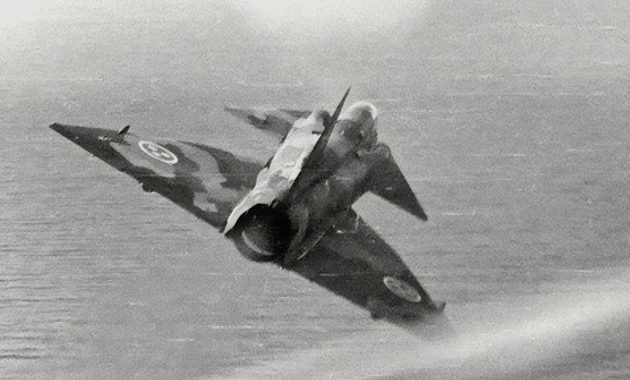
The AJ 37 served as a strike fighter, while the SF 37 and SH 37 handled reconnaissance and maritime patrol duties, respectively. Later, the JA 37 variant introduced substantial upgrades in avionics, radar, and air-to-air combat capability, effectively transforming the Viggen into a powerful interceptor. This modular evolution kept the Viggen relevant for decades, allowing it to adapt to new threats and technologies without requiring a completely new aircraft design.
The cockpit of the Viggen reflected Sweden’s user-focused approach to military and technology. Unlike the more cluttered and analog cockpits found in many aircraft of the same era, the Viggen featured a streamlined, pilot-friendly layout. Displays and instruments were arranged for optimal visibility and accessibility, emphasizing simplicity and efficiency under pressure. This ergonomic design, combined with the aircraft’s partially automated systems, reduced pilot workload and improved situational awareness—a critical advantage in fast-moving combat situations.
Throughout its service life, the Viggen was continuously upgraded with new avionics, weapons systems, and mission capabilities. Its radar, the PS-46/A for the JA 37 variant, was particularly advanced for its time. It could track multiple targets and support semi-active radar-guided missiles, providing the aircraft with credible beyond-visual-range engagement capability. This was a major step forward from earlier visual-only combat tactics and placed the Viggen on par with many contemporary NATO and Warsaw Pact fighters in terms of air-to-air lethality.
Despite its many strengths, the Viggen faced challenges when it came to export potential. Sweden’s strict neutrality policy and non-aligned stance during the Cold War limited foreign arms deals. While Saab and the Swedish government made efforts to market the Viggen to several countries, including India and Switzerland, no international sales materialized. Political considerations, high production costs, and competition from established aircraft manufacturers all played a role in the Viggen’s export limitations. Nonetheless, the aircraft’s performance and reputation remained highly respected within the aviation community.
The Viggen’s operational career spanned over three decades, serving faithfully with the Swedish Air Force from the early 1970s until the mid-2000s. It played a vital role in Sweden’s air defense strategy during a tense period of global military rivalry, offering rapid-response capability, robust design, and adaptable technology. Its unique combination of engineering elegance and practical battlefield function made it a favorite among pilots and ground crews alike.
As newer generations of fighters emerged, including Saab’s own JAS 39 Gripen, the Viggen was gradually phased out of front-line service. The Gripen offered superior agility, digital fly-by-wire controls, and compatibility with modern NATO-standard weapons and communications systems. Yet, many of the design philosophies that guided the Gripen’s development had their roots in the Viggen’s success. Modular design, multi-role flexibility, and readiness for austere operations were all key traits inherited from its predecessor.
A Proud but Private Legacy:
Today, the Viggen holds a cherished place in Swedish aviation history. Several aircraft have been preserved in museums, and a few remain airworthy as part of heritage flight displays. Their dramatic silhouette and thunderous engine noise continue to captivate aviation enthusiasts at airshows across Europe. Beyond nostalgia, the Viggen stands as a reminder of what is possible when a country commits to self-reliance, innovation, and thoughtful design in the face of global uncertainty.
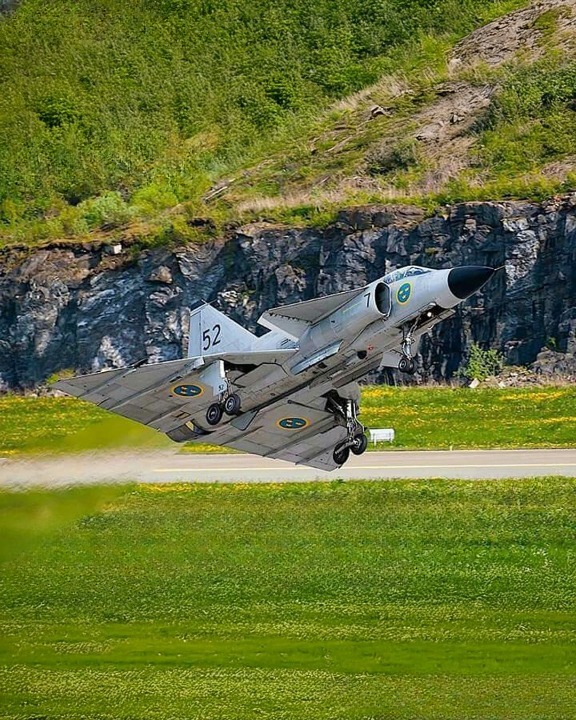
The legacy of the Saab 37 Viggen is about more than just its technical specifications or combat capabilities. It represents a uniquely Swedish solution to the problem of modern air warfare. By thinking differently and designing with clarity of purpose, Saab produced an aircraft that was not only ahead of its time but also remarkably well-suited to the realities of Sweden’s strategic position. For a nation determined to maintain its sovereignty and neutrality, the Viggen provided a formidable guardian of the skies.
As aviation technology continues to evolve, aircraft like the Viggen offer valuable lessons for future designers. They show that success doesn’t always come from following the biggest trends or mimicking the most dominant powers. Sometimes, the best solutions come from focusing on specific needs, clever engineering, and a deep understanding of how technology can serve strategy.