militaryandtech.com- In the frigid skies over Canada in the 1950s, a revolution was unfolding—one that, had it reached its full potential, might have changed the course of aviation history. The aircraft at the center of it all was the Avro Canada CF-105 Arrow, a sleek, delta-winged interceptor designed to soar higher, faster, and smarter than anything else in the air. But the Arrow’s story is not just one of technical achievement—it’s a story of ambition, politics, controversy, and an enduring legacy that has left Canadians wondering for decades: What if?
A Dream Born from Cold War Realities
The 1950s were a time of tension. The Cold War had cast a long and icy shadow over the world, and North America, caught between nuclear brinkmanship and the race for air superiority, was preparing for the worst. The Soviet Union’s bombers could potentially reach Canadian and American cities via the Arctic, and early warning systems like the Distant Early Warning (DEW) Line were being put in place.
You May Like To Read: English Electric Lightning, Britain’s Supersonic Interceptor Icon.
Canada, sitting on the front lines of this potential northern approach, needed a way to intercept enemy bombers before they reached their targets. The Royal Canadian Air Force (RCAF) required a cutting-edge, supersonic interceptor that could fly fast, climb quickly, and carry advanced weapons. Avro Canada, an aerospace company based in Malton, Ontario, took up the challenge.
What they created was not just a plane—it was a marvel.
Engineering Brilliance: A Machine Ahead of Its Time
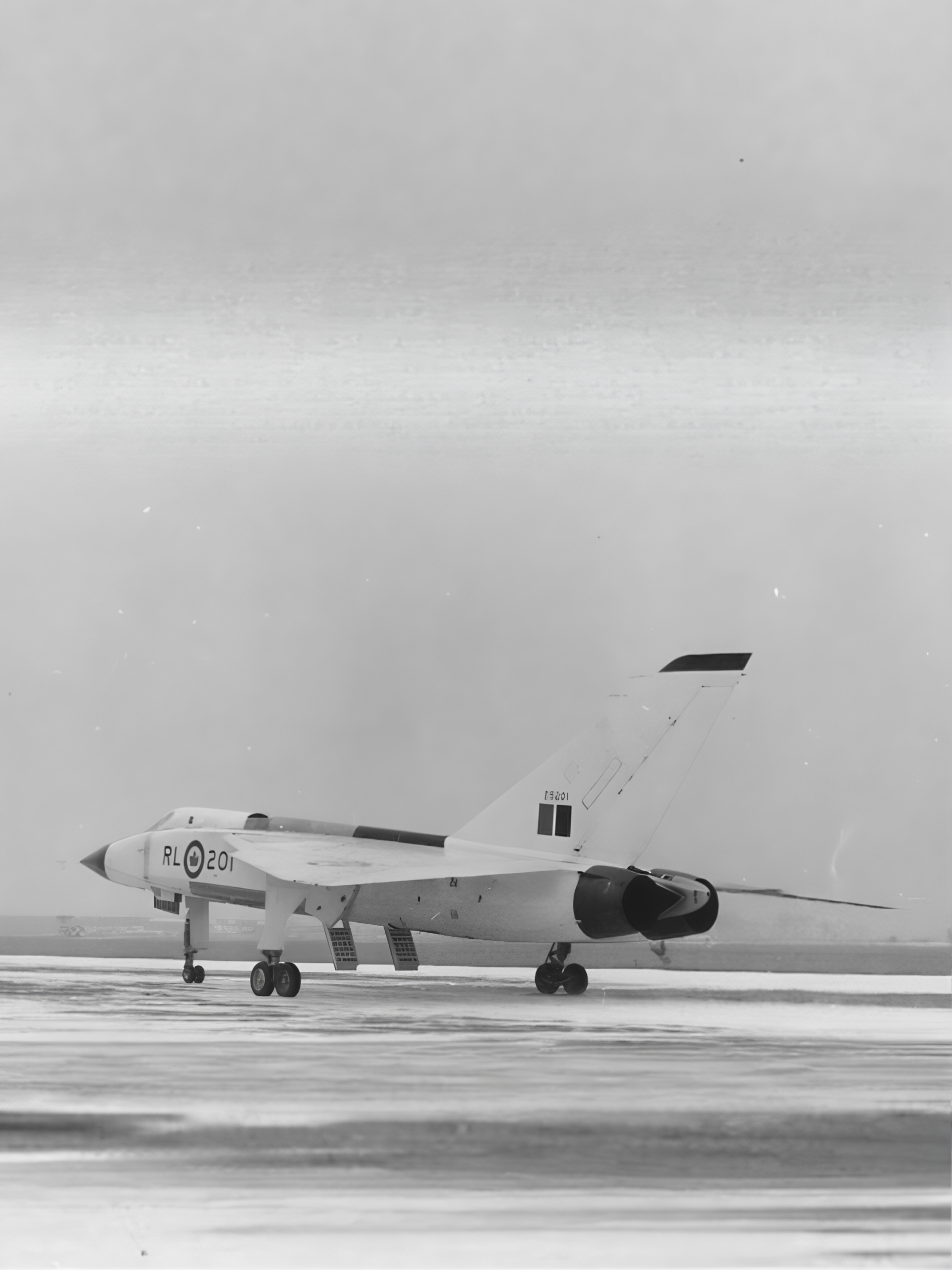
The Avro Arrow was ambitious from the start. Designed by a team led by chief designer John Frost, the aircraft featured a sleek delta wing, fly-by-wire controls, and the use of titanium and advanced composites. It was powered by the mighty Orenda Iroquois engine, an in-house Canadian design that promised to be one of the most powerful jet engines in the world.
The Arrow’s performance projections were staggering: a top speed exceeding Mach 2 (over 2,400 km/h), a ceiling above 50,000 feet, and the agility to meet and destroy high-altitude Soviet bombers.
The Arrow was also a technological pioneer. It had one of the first computer-assisted flight control systems. Its weapons systems were intended to integrate with advanced radar and fire-control technologies, making it more of an airborne weapons platform than just a fighter jet.
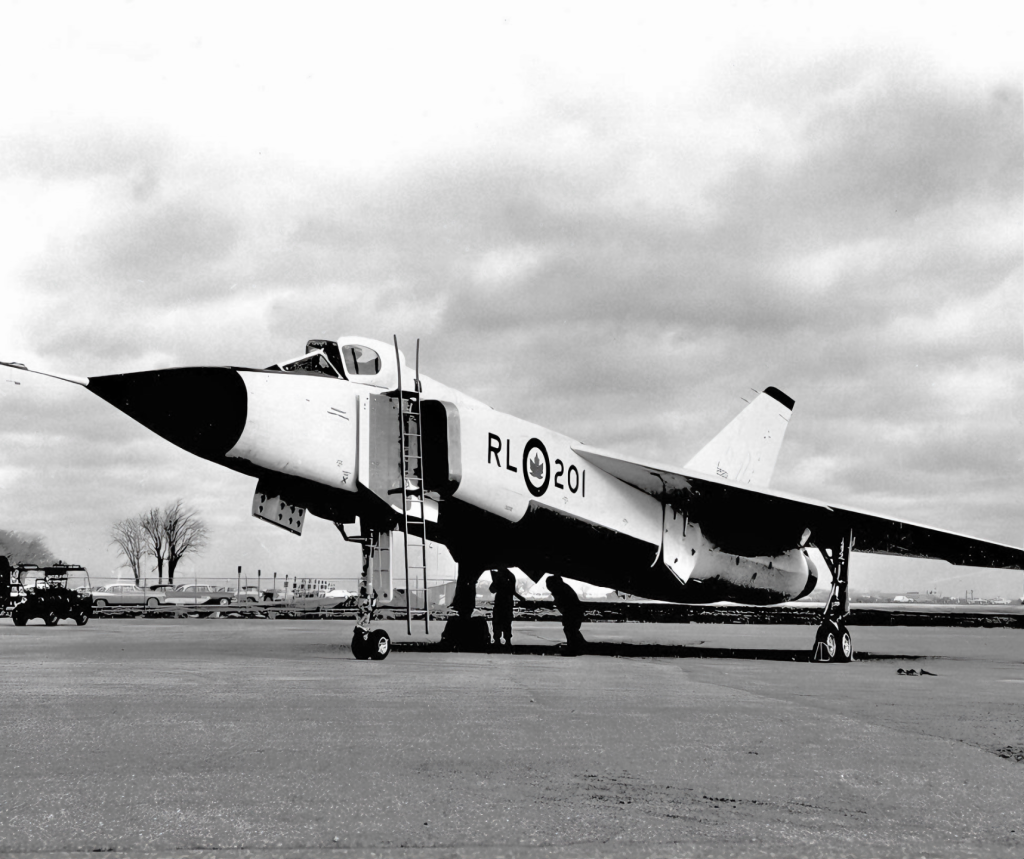
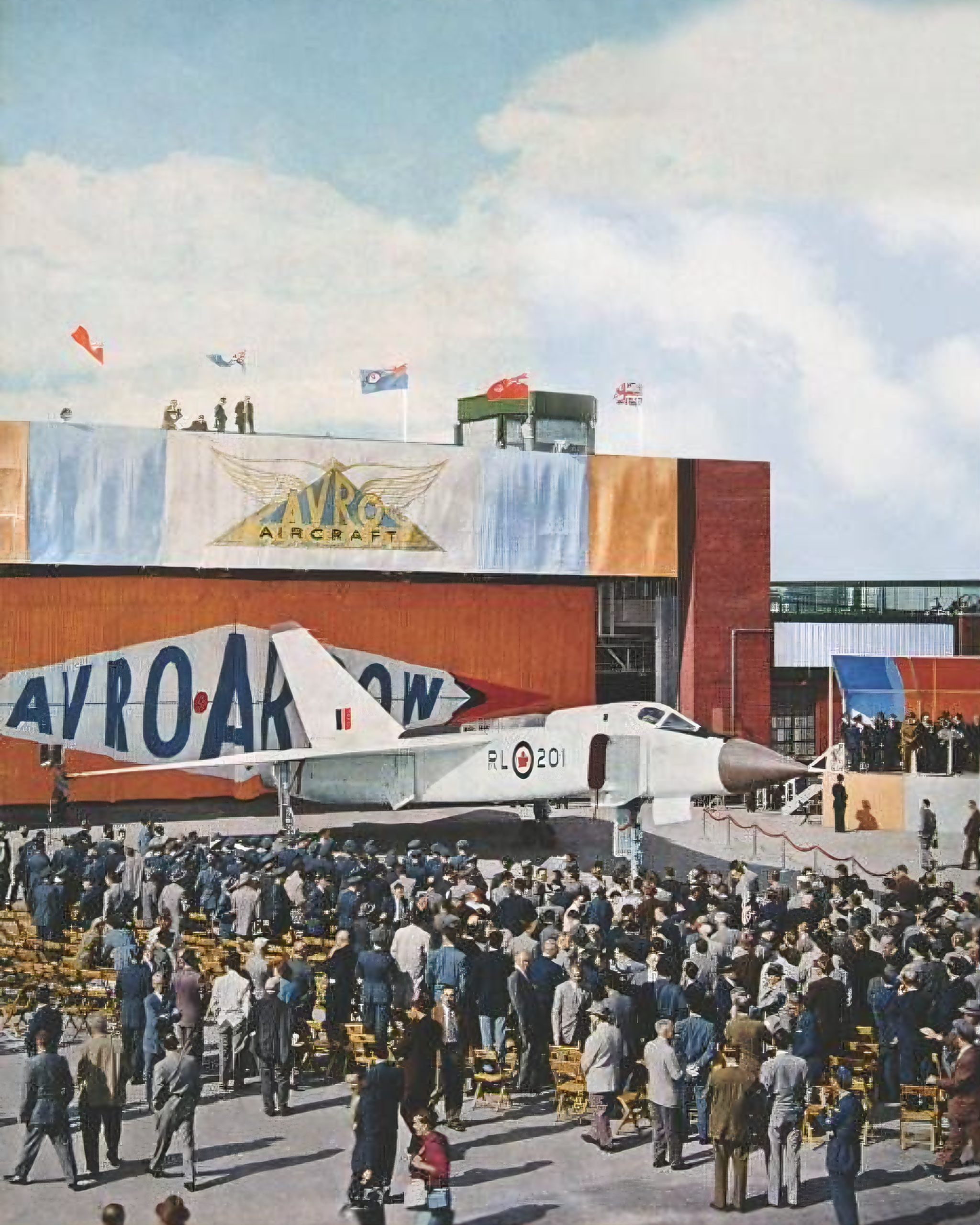
By 1957, the first prototype, RL-201, rolled out of the hangar—and it looked like the future. Sleek, white, and imposing, it was unlike anything that had ever taken off from Canadian soil.
Taking Flight
The Avro Arrow’s first flight took place on March 25, 1958, piloted by Janusz Żurakowski, a decorated test pilot of Polish origin. The Arrow performed flawlessly, flying smoothly at supersonic speeds and immediately attracting international attention.
Five prototypes were eventually built and flown—each a step closer to full production. The aircraft’s performance was excellent, and it seemed as though Canada was about to enter the elite ranks of aviation superpowers.
Yet even as the Arrow was proving itself in the air, trouble was brewing on the ground.
Politics, Pressure, and the Sudden Death of a Legend
Despite its success, the Arrow faced enormous headwinds.
First, there was the cost. The program’s price tag had ballooned, reaching hundreds of millions of dollars—staggering for a mid-sized nation like Canada. Each Arrow was expensive to produce, and the development of the Orenda Iroquois engine added further financial strain.
Then came changing defense strategies. With the rise of intercontinental ballistic missiles (ICBMs), many military analysts began to question whether high-speed interceptors were still necessary. Why build a plane to shoot down bombers if the real threat was now missiles?
The most decisive blow came with the election of Prime Minister John Diefenbaker in 1957. His government was under pressure to reduce spending, align more closely with U.S. defense policies, and make hard economic decisions. The Americans, meanwhile, offered Canada access to the BOMARC missile system—a cheaper, though ultimately less effective, alternative.
On February 20, 1959, in a move that shocked the nation, Diefenbaker abruptly announced the cancellation of the Avro Arrow program. Not only were the aircraft and engines scrapped, but the entire project was ordered destroyed. Blueprints were burned. Prototypes were cut up. Thousands of employees were laid off. The facility went silent.
The day came to be known as “Black Friday” in Canadian aerospace.
Why Destroy Everything?
One of the most haunting aspects of the Avro Arrow’s cancellation was the decision to destroy nearly every trace of the program. No flying aircraft were preserved. No complete prototypes were saved for museums. Only a few parts—cockpits, models, landing gear—remain scattered in private collections and archives.
The rationale behind the destruction was reportedly based on national security. The government feared sensitive technology might fall into the wrong hands, particularly the Soviets. Others speculate that it was done to prevent political embarrassment or to erase evidence of what was seen as a costly boondoggle.
Whatever the true reason, the result was the same: a stunning technological achievement vanished almost overnight.
The Human Cost
The Avro Arrow’s cancellation was not just a blow to national pride—it was a personal catastrophe for the 14,000 people who worked on the program. Engineers, designers, fabricators, test pilots—many of the best minds in Canada’s aerospace industry—found themselves jobless.
A large number of them were quickly recruited by NASA and other American aerospace firms. Some went on to play key roles in the Apollo moon missions and the development of aircraft like the SR-71 Blackbird and Space Shuttle. In a bitter twist, the United States would benefit enormously from the talent that Canada had so suddenly discarded.
A Legacy That Won’t Die
In the years since the Arrow’s demise, its legend has only grown.
Books, documentaries, and films (like the 1997 CBC movie The Arrow, starring Dan Aykroyd) have kept its memory alive. For many Canadians, the Arrow symbolizes a moment when Canada dared to dream big—and was punished for it.
Efforts to recover pieces of the Arrow continue even today. In 2017, a project called Raise the Arrow successfully recovered models of the Arrow from the bottom of Lake Ontario, where they had been launched during weapons testing in the 1950s. The search for more relics is ongoing.
And every few years, a debate reignites: Should Canada try to rebuild the Arrow? Could a modern version be developed using today’s materials and systems?
Though the logistics make a full revival unlikely, the fact that such a conversation persists is a testament to the Arrow’s enduring grip on the national imagination.
Lessons from the Arrow
What can we learn from the Avro Arrow?
On one level, it’s a story about missed opportunities and political shortsightedness. But on another, it’s a story of extraordinary innovation, vision, and national capability. The Arrow proved that a relatively small country could challenge the biggest players on the global stage—and win, at least technically.
It also highlights the tensions between technological ambition and political reality, between innovation and pragmatism. The Arrow’s cancellation wasn’t just about money or defense strategy—it was about the kind of country Canada wanted to be.
In many ways, the Avro Arrow is not just a story about a plane. It’s a story about identity, about potential, and about what happens when a nation reaches for the stars—and then lets go.
The Arrow Flies On!
Though the Avro Arrow never saw combat or mass production, its spirit still soars.
In classrooms, in museums, in hangars and hobby shops across Canada, models of the Arrow are lovingly built and proudly displayed. Engineers and aviation fans continue to discuss its design, dissect its performance, and debate its fate. It lives on as both an inspiration and a cautionary tale. Canada may have buried the Avro Arrow, but it could never bury the dream it represented.