The Mikoyan-Gurevich MiG-21 (NATO reporting name: Fishbed) is one of the most iconic fighter aircraft ever built. Developed by the Soviet Union during the height of the Cold War, the MiG-21 became the most widely produced supersonic jet fighter in aviation history.
With its distinctive delta wing, nose-mounted air intake, and ability to reach twice the speed of sound, the aircraft served as the backbone of dozens of air forces for more than six decades. Over 11,000 examples were produced, and the fighter saw combat on nearly every continent.
Development
The MiG-21’s story began in the early 1950s when Soviet military planners sought a lightweight interceptor capable of countering new generations of high-speed Western bombers and fighters. Engineers at the Mikoyan-Gurevich design bureau experimented with several wing configurations before selecting a tailed delta-wing design that offered excellent performance at supersonic speeds. The first prototypes flew in 1955, and continued testing demonstrated that the aircraft could exceed Mach 2, a remarkable achievement for the era.
The resulting fighter was intentionally simple. Soviet designers prioritized speed, climb rate, reliability, and ease of maintenance rather than sophisticated electronics. This approach created an aircraft that was affordable to produce, easy to operate from rough airfields, and highly attractive to Soviet allies around the world. The MiG-21 entered operational service in 1959 and quickly became one of the Soviet Union’s most successful military exports.
You May Like To Read: Everything You Need To Know About The Lockheed F-104 Starfighter
Throughout its production life, the MiG-21 evolved through dozens of variants. Later versions received improved radar systems, more powerful engines, additional fuel capacity, and expanded weapons options. Licensed production also took place outside the Soviet Union, including in India, China, and Czechoslovakia, helping ensure the aircraft’s enormous global presence.
Service History
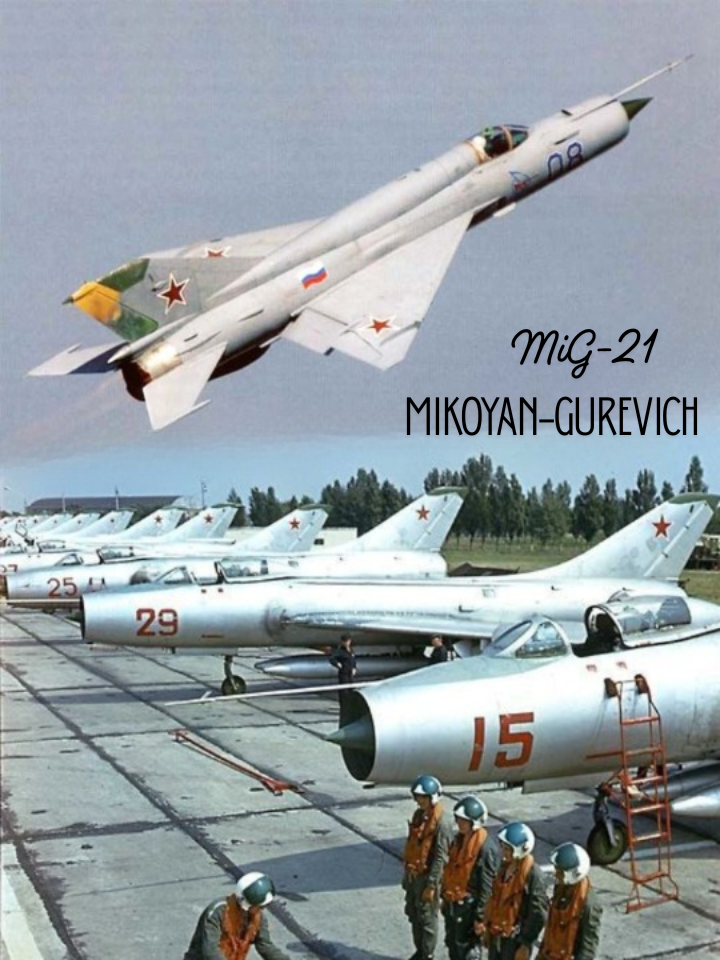
The MiG-21 earned its reputation through extensive combat service. During the Vietnam War, North Vietnamese pilots used MiG-21s to challenge American aircraft, including advanced fighters such as the F-4 Phantom II.
The aircraft’s speed, small size, and agility made it a dangerous opponent in skilled hands, forcing the United States to revise fighter training and aerial combat tactics.
The fighter also played major roles in numerous Middle Eastern conflicts, including the Arab-Israeli Wars. Soviet-supplied MiG-21s flew with the air forces of Egypt, Syria, and Iraq, becoming a familiar sight over the battlefields of the region. Meanwhile, the aircraft saw action across Africa, Asia, and Eastern Europe, participating in more than 40 conflicts during its long career.
Perhaps nowhere outside the Soviet Union did the MiG-21 leave a greater mark than in India. The Indian Air Force operated the type for over sixty years, using it during the wars of 1965 and 1971, the Kargil conflict, and numerous peacetime missions. The aircraft remained in service until its final retirement in 2025, marking the end of one of the longest operational careers of any fighter jet.
Operators
One of the MiG-21’s greatest achievements was its widespread adoption. More than 60 nations operated the fighter at some point, making it one of the most successful military aircraft exports in history.
Major operators included:
- Soviet Union
- India
- China
- Vietnam
- Egypt
- Syria
- Iraq
- Romania
- Poland
- North Korea
Many countries continued flying upgraded versions well into the 21st century, demonstrating the aircraft’s durability and adaptability.
What Made the MiG-21 Stand Out?
1. First Soviet Mach 2 Success
The MiG-21 was among the first truly successful Soviet fighters capable of sustained Mach 2 performance. Its speed allowed it to intercept enemy aircraft quickly and remain competitive against many Western designs of its era.
2. Simple Yet Effective Design
Unlike many Western fighters that relied on increasingly complex systems, the MiG-21 emphasized simplicity. This made it inexpensive, easy to maintain, and suitable for operation by countries with limited resources.
3. Distinctive Delta Wing
The aircraft’s delta wing gave it excellent high-speed performance and rapid climb capability. Combined with its lightweight structure, the design allowed the MiG-21 to achieve impressive acceleration and maneuverability.
4. Massive Production Numbers
More than 11,000 MiG-21s were built, making it the most-produced supersonic fighter aircraft ever constructed. Few military aircraft have matched its production scale or global influence.
5. Extraordinary Longevity
The MiG-21 first flew in 1955, yet upgraded versions remained operational in several countries well into the 2020s. Few combat aircraft have enjoyed such a long and successful service life.
Legacy
The MiG-21 was far more than just another Cold War fighter. It became a symbol of Soviet aviation engineering, a cornerstone of air forces around the globe, and one of the most influential combat aircraft ever built. Its combination of speed, simplicity, affordability, and combat effectiveness ensured that the Fishbed would remain relevant long after many of its contemporaries had disappeared from the skies. Today, the MiG-21 stands as one of aviation history’s true legends: a fighter that shaped aerial warfare for generations.