When people think about Britain’s legendary aircraft, famous names like the Spitfire, Hurricane, and Lancaster usually come to mind. Yet behind these iconic warplanes was another aircraft that rarely received the same attention despite making an enormous contribution to victory. That aircraft was the Avro Anson.
Often called “Faithful Annie” by the men and women who flew and maintained it, the Avro Anson was never the fastest, most heavily armed, or most glamorous aircraft of its era. Instead, it became something arguably more valuable, a dependable workhorse capable of performing almost any task asked of it.
For more than three decades, the Anson served in roles ranging from maritime patrol and anti-submarine warfare to navigation training, transport, communication, and search and rescue. Thousands of pilots, navigators, wireless operators, and bombardiers who later flew famous combat aircraft first learned their skills inside the cockpit of the humble Anson.
The Birth of the Avro Anson
The story of the Avro Anson began during the early 1930s, when Britain recognized the growing need to protect its coastlines against increasingly capable naval threats.
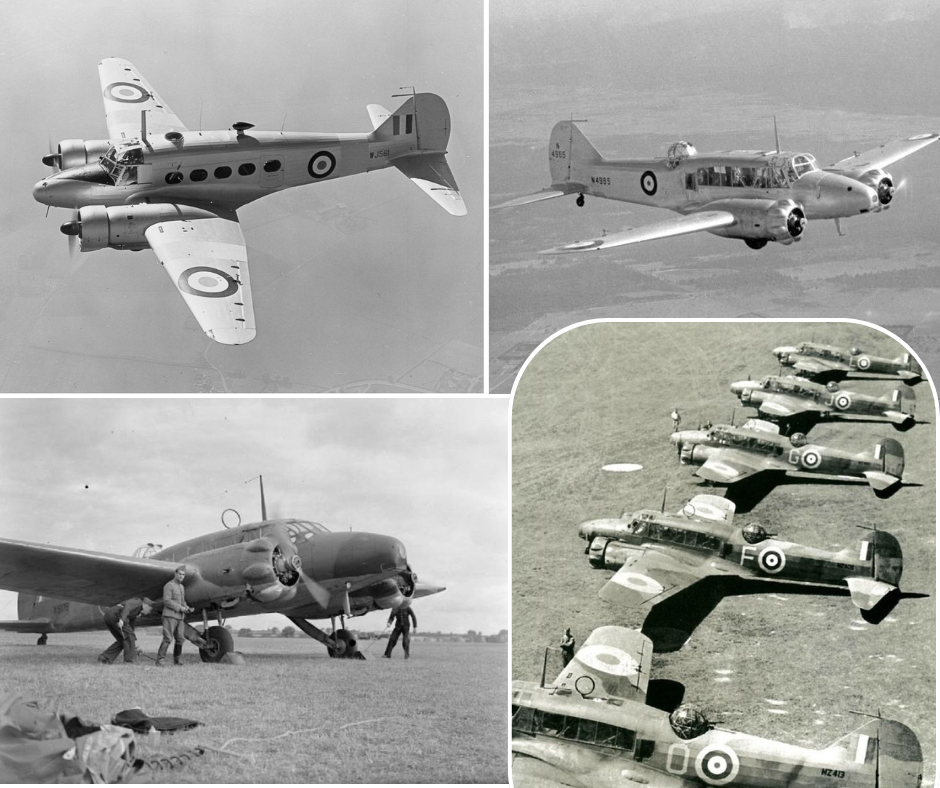
British manufacturer Avro designed the aircraft from its successful civilian transport, the Avro 652. Engineers transformed the comfortable passenger aircraft into a military reconnaissance platform by adding defensive armament, military equipment, and stronger structural components.
The aircraft made its first flight on March 24, 1935. Only a year later, the Royal Air Force adopted the aircraft under the name “Anson,” honoring Admiral George Anson, an eighteenth-century British naval commander famous for his global voyages and military victories.
At the time, the Anson represented a significant technological step forward. It became the Royal Air Force’s first monoplane equipped with a retractable landing gear to enter operational service, replacing older biplanes that were rapidly becoming obsolete.
Designed for the Sea
The Avro Anson was originally built as a coastal reconnaissance aircraft.
Its primary mission involved long patrols over Britain’s surrounding waters, searching for enemy warships, submarines, and suspicious merchant vessels.
Powered by two Armstrong Siddeley Cheetah radial engines producing approximately 350 horsepower each, the aircraft cruised comfortably over the sea while carrying a crew of three to four.
Its maximum speed reached around 188 mph (303 km/h), while its endurance allowed patrols lasting several hours, essential for monitoring Britain’s extensive coastline.
Although modest by later wartime standards, these capabilities made the Anson well suited for maritime surveillance during the late 1930s.
Britain’s First Line of Defense
When World War II erupted in September 1939, the Royal Air Force possessed hundreds of Avro Ansons serving with Coastal Command.
Before more advanced aircraft like the Lockheed Hudson and Vickers Wellington became available in large numbers, the Anson carried much of Britain’s responsibility for defending its coastal waters.
Day after day, crews flew long, exhausting patrols over the North Sea and the Atlantic Ocean.
Their mission was simple but dangerous:
Find German submarines before the submarines found Allied convoys.
The work demanded patience, concentration, and endurance. Many flights lasted for hours over cold, empty seas with little sign of enemy activity. Yet every successful patrol protected merchant ships carrying food, fuel, ammunition, and supplies essential for Britain’s survival.
Fighting German U-Boats
Although the Anson was not designed as a dedicated attack aircraft, it could carry small bombs and depth charges beneath its wings.
Whenever crews spotted a German U-boat on the surface, they immediately descended for an attack.
These surprise assaults often forced submarines to dive before reaching convoy routes, disrupting German operations even when no submarine was sunk.
Some Ansons successfully damaged enemy submarines, while many others drove them away from vulnerable shipping lanes.
In the early years of the war, these missions played an important role in Britain’s growing anti-submarine campaign.
Every convoy that reached Britain safely strengthened the nation’s ability to continue fighting.
An Unexpected Air Victory
One of the most remarkable moments in the Anson’s history occurred on June 1, 1940.
During a patrol over the North Sea, an Avro Anson encountered several German Messerschmitt Bf 109 fighters.
On paper, the outcome should have been obvious.
The Bf 109 was faster, more agile, and significantly more heavily armed.
Yet skilled defensive flying by the Anson crew forced two attacking fighters into collisions with each other while another was driven off after suffering damage.
Against overwhelming odds, the slow reconnaissance aircraft survived an encounter that many believed impossible.
The engagement became one of the most famous stories associated with the aircraft and demonstrated that experienced crews could sometimes overcome seemingly impossible situations through discipline and determination.
The Aircraft That Trained an Air Force
While the Anson performed valuable combat duties early in the war, its greatest contribution came elsewhere.
As Britain expanded the Royal Air Force under the British Commonwealth Air Training Plan, thousands upon thousands of new aircrew needed instruction.
The Anson became one of the most important training aircraft of the entire war.
Future bomber crews learned navigation, wireless communication, bombing procedures, instrument flying, multi-engine handling, and crew coordination aboard the dependable twin-engine aircraft.
Virtually every member of Bomber Command passed through training schools where the Anson played a central role.
Pilots who later flew Lancasters over Germany, Mosquitos across occupied Europe, and transport aircraft around the world often began their military aviation careers inside an Anson cockpit.
Without this massive training effort, Britain’s advanced combat aircraft would have lacked qualified crews.
Serving Across the Commonwealth
The Avro Anson became one of the most widely used British aircraft of World War II.
It served not only with the Royal Air Force but also with the air forces of Canada, Australia, New Zealand, South Africa, India, and numerous Allied nations.
Canada, in particular, became one of the Anson’s largest operators.
Hundreds of aircraft trained Allied crews at airfields spread across the country under the British Commonwealth Air Training Plan.
Far from enemy attack, Canada’s vast open spaces became ideal classrooms where future aircrews developed the skills needed for combat operations overseas.
More Than a Patrol Aircraft
One reason the Anson remained in service for so long was its extraordinary versatility.
Throughout its career, it performed an impressive variety of missions:
- Coastal reconnaissance
- Anti-submarine patrol
- Navigation training
- Bombing instruction
- Radio operator training
- Aircrew transport
- Staff transport
- Medical evacuation
- Communication flights
- Search and rescue support
- Calibration of radar and navigation equipment
Few military aircraft proved so adaptable across such a wide range of duties.
Built in Huge Numbers
Production continued throughout the Second World War.
By the time manufacturing finally ended, more than 11,000 Avro Ansons had been built in Britain and Canada.
The Canadian-built versions introduced numerous improvements while supporting Allied wartime production across North America.
This enormous production made the Anson one of Britain’s most successful twin-engine military aircraft.
Why Crews Loved the Anson
Combat aircraft often earned respect through speed or firepower.
The Anson earned affection through reliability.
Pilots appreciated its forgiving handling characteristics, making it ideal for inexperienced aircrew.
Maintenance crews found it relatively straightforward to repair and service.
Instructors valued its predictable flying qualities, allowing students to focus on learning rather than struggling to control the aircraft.
Its comfortable cabin also made long training flights less exhausting than many contemporary aircraft.
These qualities helped earn its famous nickname: “Faithful Annie.” It was an aircraft crews trusted.
Life After the War
Following the end of World War II, many military aircraft disappeared almost overnight.
The Avro Anson did not.
It continued serving with numerous air forces well into the 1950s and, in some countries, even the 1960s.
Many surplus aircraft found second careers as civilian transports, aerial survey aircraft, executive transports, and flying laboratories.
Its robust construction and dependable engines made it useful long after wartime needs had faded.
The Anson’s Lasting Legacy
The Avro Anson may never have achieved the fame of the Spitfire or Lancaster, but its importance cannot be measured solely by victories in aerial combat.
It guarded Britain’s shores during the darkest days of the war.
It hunted submarines threatening Allied shipping.
It transported personnel and equipment wherever needed.
Most importantly, it trained the generations of aircrew who flew nearly every major Allied aircraft of World War II.
Behind every legendary bomber crew and countless successful missions stood thousands of hours spent learning the fundamentals aboard the dependable Avro Anson.
Its greatest weapon was not speed or firepower—it was reliability.
The Avro Anson proved that wars are not won only by the aircraft that dominate headlines. They are also won by the dependable machines that quietly perform the essential tasks every single day. For Britain and the Commonwealth, the “Faithful Annie” did exactly that, earning its place as one of the most important and respected aircraft in aviation history.